English
- English
- Español
- Português
- русский
- Français
- 日本語
- Deutsch
- tiếng Việt
- Italiano
- Nederlands
- ภาษาไทย
- Polski
- 한국어
- Svenska
- magyar
- Malay
- বাংলা ভাষার
- Dansk
- Suomi
- हिन्दी
- Pilipino
- Türkçe
- Gaeilge
- العربية
- Indonesia
- Norsk
- تمل
- český
- ελληνικά
- український
- Javanese
- فارسی
- தமிழ்
- తెలుగు
- नेपाली
- Burmese
- български
- ລາວ
- Latine
- Қазақша
- Euskal
- Azərbaycan
- Slovenský jazyk
- Македонски
- Lietuvos
- Eesti Keel
- Română
- Slovenski
- मराठी
- Srpski језик

Rear-tipping Dump Semi-trailer: How Can It Improve Heavy-Duty Hauling Efficiency?
This guide explains the structure, working principle, advantages, applications, selection considerations, maintenance requirements, and operating practices of rear-tipping dump semi-trailers. It focuses on common problems faced by fleet owners and transport operators, including excessive unloading time, difficult material discharge, high maintenance costs, poor stability, insufficient payload capacity, and unreliable hydraulic performance.
Whether you are transporting sand, gravel, stone, coal, construction debris, agricultural materials, or other bulk cargo, understanding the trailer's design and configuration can help you select equipment that matches your working conditions and transportation requirements.
Table of Contents
- What Is a Rear-tipping Dump Semi-trailer?
- How Does a Rear-tipping Dump Semi-trailer Work?
- Key Components and Structural Design
- Major Advantages for Bulk Material Transport
- Common Applications and Industries
- How to Select the Right Rear-tipping Dump Semi-trailer
- Payload Capacity and Load Distribution
- Hydraulic System Considerations
- Safety and Operating Practices
- Maintenance Guide for Long Service Life
- Rear Tipping vs. Other Dumping Configurations
- What Should Buyers Confirm Before Ordering?
- Frequently Asked Questions
- Conclusion
What Is a Rear-tipping Dump Semi-trailer?
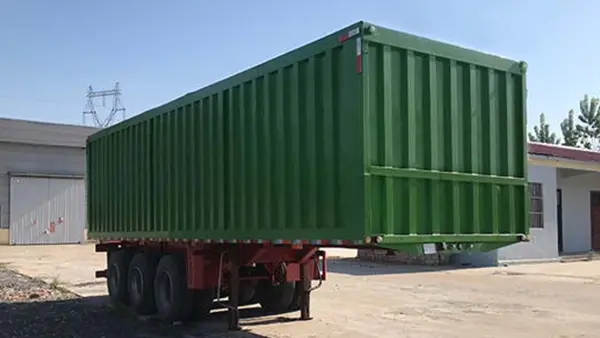
A rear-tipping dump semi-trailer is a heavy-duty trailer equipped with a tipping body that raises from the front and discharges cargo through the rear. It is normally connected to a tractor unit and is designed for transporting loose or bulk materials that can be unloaded by gravity after the cargo box is lifted.
Unlike a conventional flatbed trailer, the dump body is specifically engineered for loading, containing, and discharging bulk materials. The rear-tipping configuration is particularly useful when the unloading area provides sufficient space behind the trailer and when fast material discharge is a priority.
Depending on the application, the dump body may be manufactured from high-strength carbon steel, wear-resistant steel, or other suitable materials. Body dimensions, axle configuration, suspension type, hydraulic equipment, and braking systems can also be configured according to local regulations and operating conditions.
How Does a Rear-tipping Dump Semi-trailer Work?
The basic unloading process is straightforward, but every component must work together correctly. After arriving at the unloading location, the driver positions the tractor and trailer on suitable, stable ground. The hydraulic system is then activated to extend the lifting cylinder and raise the front section of the dump body.
As the body rises, the cargo moves toward the rear discharge opening under gravity. Once the required tipping angle is reached, most free-flowing materials can slide out of the body. The body is then lowered smoothly before the vehicle resumes transportation.
- Positioning: The trailer is placed on a stable and suitable unloading surface.
- Hydraulic activation: Hydraulic pressure extends the lifting cylinder.
- Body elevation: The front of the dump body rises and creates a downward material flow toward the rear.
- Material discharge: Bulk cargo exits through the rear opening.
- Controlled lowering: The dump body returns to its transport position.
This mechanism minimizes manual unloading work and can significantly shorten turnaround time compared with unloading methods that require extensive labor or separate material-handling equipment.
Key Components and Structural Design
A reliable rear-tipping dump semi-trailer is more than a simple steel box mounted on a chassis. Its performance depends on the interaction of the frame, tipping body, hydraulic system, axles, suspension, braking equipment, and supporting components.
| Component | Primary Function | Important Consideration |
|---|---|---|
| Dump body | Contains and transports bulk cargo | Material strength, thickness, volume and shape |
| Hydraulic cylinder | Raises and lowers the dump body | Lifting capacity, reliability and maintenance |
| Main frame | Supports the load and distributes forces | Structural strength and welding quality |
| Axles | Carry and transfer load to the road | Capacity, configuration and regulatory requirements |
| Suspension | Supports the chassis and absorbs road impacts | Load rating and operating environment |
| Rear gate | Controls cargo discharge | Sealing, strength and opening mechanism |
| Braking system | Provides controlled deceleration | Compatibility and local compliance |
Major Advantages for Bulk Material Transport
Transport companies often face the same operational challenges: long unloading times, excessive labor requirements, difficult material handling, equipment downtime, and rising transportation costs. A properly specified rear-tipping dump semi-trailer can address many of these issues.
1. Faster Unloading
Hydraulic tipping allows the cargo body to discharge material efficiently without requiring workers to manually remove the load. Faster unloading can help increase the number of transport cycles completed during a working day.
2. High Load-Carrying Capability
The chassis and dump body can be engineered for heavy-duty applications. Proper matching of axle capacity, frame strength, body structure, and suspension helps the trailer handle demanding loads without compromising operating stability.
3. Efficient Bulk Material Handling
Materials such as gravel, sand, crushed stone, soil, coal, construction waste, and similar bulk products can generally be discharged efficiently when the body design and tipping angle match the material characteristics.
4. Reduced Manual Labor
Hydraulic unloading reduces the need for workers to physically remove or shovel materials from the trailer, which can improve workplace efficiency and reduce unnecessary manual handling.
5. Flexible Configuration
Trailer specifications can be adapted to different payload requirements, road conditions, cargo types, axle arrangements, suspension systems, and regional regulations.
Common Applications and Industries
Rear-tipping dump semi-trailers are widely used wherever large quantities of loose materials need to be transported and discharged efficiently.
- Construction: transporting sand, gravel, concrete aggregates, soil, demolition materials, and construction debris.
- Mining: moving ore, rock, coal, mineral materials, and other heavy bulk cargo.
- Road infrastructure: hauling aggregates and materials for highways, bridges, and other infrastructure projects.
- Agriculture: transporting grain, fertilizer, feed, soil amendments, and selected agricultural materials.
- Waste management: handling certain dry construction and industrial bulk waste streams.
- Material supply: delivering bulk materials between processing plants, warehouses, construction sites, and distribution points.
The most suitable configuration depends on the material density, loading method, route conditions, unloading environment, legal weight limits, and expected operating frequency.
How to Select the Right Rear-tipping Dump Semi-trailer
Choosing a trailer solely by purchase price can create higher costs later. A better approach is to evaluate the complete operating environment and match the trailer specification to actual working requirements.
- Identify the cargo: Determine material density, abrasiveness, moisture, flow characteristics, and average load weight.
- Estimate operating conditions: Consider highways, construction sites, mining roads, uneven terrain, and other road surfaces.
- Determine legal requirements: Confirm allowable dimensions, axle loads, gross vehicle weight, braking requirements, lighting, and other local regulations.
- Choose the body volume: The body should provide useful capacity without encouraging excessive overloading.
- Evaluate hydraulic requirements: The lifting system should provide sufficient capacity for the body and intended cargo.
- Consider maintenance access: Components that are easy to inspect and service can reduce downtime.
- Check supplier support: Technical assistance, spare parts availability, documentation, and after-sales service can be important over the trailer's service life.
Payload Capacity and Load Distribution
Payload capacity should never be considered independently from the trailer's structure and legal operating limits. A larger body does not automatically mean a better trailer. If the cargo is very dense, a high-volume body may reach the legal weight limit before it is physically full.
Load distribution is equally important. Cargo should be spread appropriately within the dump body to avoid excessive loading on individual axles or creating unstable handling characteristics. Operators should follow the manufacturer's loading recommendations and applicable regulations.
Practical reminder: The ideal dump semi-trailer balances body volume, structural weight, payload, axle capacity, stability, and legal road limits rather than maximizing only one specification.
Hydraulic System Considerations
The hydraulic system is one of the most important parts of a rear-tipping dump semi-trailer because it directly controls the lifting and lowering of the body. Hydraulic performance can influence unloading speed, reliability, operating safety, and maintenance requirements.
Buyers should pay attention to the hydraulic cylinder, pump compatibility, hydraulic hoses, fittings, control system, oil quality, and protection of hydraulic components against mechanical damage. The hydraulic system should be appropriately matched to the trailer body and expected load rather than selected only according to nominal lifting speed.
Regular inspections can help identify leaking hoses, damaged fittings, abnormal cylinder movement, unusual hydraulic noise, or other signs of developing problems before they cause extended downtime.
Safety and Operating Practices
Dumping a heavy load changes the trailer's center of gravity, so unloading should always be carried out under appropriate conditions. Operators should follow the manufacturer's instructions, local traffic regulations, and site-specific safety procedures.
- Inspect the trailer before operation.
- Check that the hydraulic system is functioning properly.
- Use a stable unloading surface whenever possible.
- Ensure adequate overhead clearance before raising the dump body.
- Keep people away from the tipping and discharge area.
- Avoid operating the raised body on unsuitable slopes or unstable ground.
- Do not exceed the permitted payload or axle load.
- Confirm that the body is completely lowered and secured before traveling.
- Follow all applicable site, road, and manufacturer safety requirements.
These practices are especially important in mining, construction, and other environments where uneven surfaces, heavy loads, and frequent loading cycles can increase operational risks.
Maintenance Guide for Long Service Life
Preventive maintenance is generally more cost-effective than waiting for a major component to fail. A maintenance schedule should be developed according to operating frequency, cargo type, road conditions, climate, and manufacturer recommendations.
| Inspection Area | What to Check |
|---|---|
| Dump body | Cracks, deformation, corrosion, wear and damaged welds |
| Hydraulic system | Leaks, hoses, fittings, cylinder condition and hydraulic oil |
| Axles and wheels | Fasteners, tires, hubs and signs of abnormal wear |
| Braking system | Brake components, air lines and system response |
| Suspension | Springs, air components, brackets and mounting points |
| Frame | Structural deformation, cracks, corrosion and connection points |
After carrying abrasive materials, operators should also pay particular attention to areas of the dump body that experience repeated impact and friction. Early detection of wear can help prevent small defects from becoming expensive structural repairs.
Rear Tipping vs. Other Dumping Configurations
Different dumping configurations are designed for different working environments. Rear tipping is often selected because of its relatively straightforward discharge path and suitability for conventional construction and bulk transport applications.
| Configuration | Typical Strength | Key Limitation |
|---|---|---|
| Rear tipping | Efficient rear discharge and simple material flow | Requires suitable rear clearance during unloading |
| Side tipping | Useful where side discharge is advantageous | Requires appropriate lateral unloading space |
| Specialized tipping systems | Can address specific material-handling requirements | May involve greater complexity or specialized maintenance |
The correct configuration should be determined by the jobsite, unloading method, material characteristics, road regulations, and fleet requirements rather than by a single specification.
What Should Buyers Confirm Before Ordering?
Before placing an order, buyers should provide the manufacturer with detailed information about their intended operation. This allows the trailer to be configured more accurately and reduces the risk of selecting an unsuitable specification.
- Required payload or gross vehicle weight
- Preferred body volume and dimensions
- Type and density of transported materials
- Number and capacity of axles
- Suspension requirements
- Hydraulic tipping requirements
- Rear gate configuration
- Brake and electrical system requirements
- Local road regulations and dimensional restrictions
- Operating climate and road conditions
- Paint, corrosion protection, and surface treatment requirements
- Spare parts and after-sales support
Shijiazhuang Jinfeng Special Vehicle Co., Ltd. can provide customized special-vehicle solutions according to different transportation applications and customer requirements. Working with an experienced manufacturer can help buyers evaluate structural configuration, hydraulic equipment, payload requirements, and practical operating conditions before production.
Frequently Asked Questions
What materials can a rear-tipping dump semi-trailer transport?
Typical applications include sand, gravel, crushed stone, soil, aggregates, coal, construction debris, minerals, and selected agricultural bulk materials. The trailer body should be matched to the material's weight, abrasiveness, moisture, and flow characteristics.
How does a rear-tipping dump semi-trailer unload cargo?
A hydraulic lifting system raises the front of the dump body. As the body reaches its designed tipping position, gravity causes the bulk material to move toward and exit through the rear opening.
Is a larger dump body always better?
No. A larger body may provide greater volume, but the appropriate capacity depends on material density, legal weight limits, axle capacity, structural design, and the actual operating environment.
What affects the service life of a dump semi-trailer?
Material type, loading practices, road conditions, payload management, structural quality, hydraulic maintenance, corrosion protection, inspection frequency, and overall operating practices can all affect service life.
Why is hydraulic system quality important?
The hydraulic system provides the force required to raise and lower the dump body. Reliable hydraulic components can support consistent unloading performance and reduce the risk of operational interruptions caused by leaks or component failures.
What should I consider when importing a dump semi-trailer?
Confirm technical specifications, local road regulations, axle and braking requirements, dimensions, documentation, shipping arrangements, spare parts, warranty conditions, and after-sales technical support before placing an international order.
Conclusion
A rear-tipping dump semi-trailer is a practical solution for businesses that need to move and unload large quantities of bulk material efficiently. Its value comes from the combination of hydraulic tipping, strong structural design, appropriate payload capacity, reliable running gear, and straightforward unloading operation.
The best trailer is not necessarily the one with the largest body or the lowest initial price. A successful purchase should balance payload, durability, hydraulic performance, operating conditions, legal requirements, maintenance accessibility, and long-term support.
For construction contractors, mining operators, bulk-material transport companies, agricultural users, and other heavy-duty transport businesses, choosing the correct configuration can improve loading and unloading efficiency while supporting more predictable fleet operation.
Looking for a Rear-tipping Dump Semi-trailer?
If you are planning to purchase a rear-tipping dump semi-trailer for construction, mining, bulk-material transportation, or other demanding applications, contact us to discuss your required payload, body volume, axle configuration, hydraulic system, operating conditions, and customization needs. Shijiazhuang Jinfeng Special Vehicle Co., Ltd. can help you identify a suitable special-vehicle configuration for your application.
Contact us today to discuss your rear-tipping dump semi-trailer requirements and request a suitable configuration.
Related News
- How Can a Front-lifting Dump Semi-trailer Improve Heavy-duty Transport Efficiency?
- How Does a Container Skeleton Semi-trailer Improve Modern Container Transportation Efficiency?
- Why Is a Low-bed Semi-trailer Essential for Heavy Transportation?
- How Do Standard Beam Transport Semi-Trailers Cut Oversized Cargo Transport Risks & Fleet Operating Costs?
- How Does a Gooseneck Flatbed Semi-Trailer Improve Heavy Cargo Transportation?
- Why Is a Standard Flatbed Semi-trailer Essential for Modern Freight Transportation?
Leave me a message