English
- English
- Español
- Português
- русский
- Français
- 日本語
- Deutsch
- tiếng Việt
- Italiano
- Nederlands
- ภาษาไทย
- Polski
- 한국어
- Svenska
- magyar
- Malay
- বাংলা ভাষার
- Dansk
- Suomi
- हिन्दी
- Pilipino
- Türkçe
- Gaeilge
- العربية
- Indonesia
- Norsk
- تمل
- český
- ελληνικά
- український
- Javanese
- فارسی
- தமிழ்
- తెలుగు
- नेपाली
- Burmese
- български
- ລາວ
- Latine
- Қазақша
- Euskal
- Azərbaycan
- Slovenský jazyk
- Македонски
- Lietuvos
- Eesti Keel
- Română
- Slovenski
- मराठी
- Srpski језик

How Can a Front-lifting Dump Semi-trailer Improve Heavy-duty Transport Efficiency?
A front-lifting dump semi-trailer is designed to make bulk-material transportation, unloading, and fleet operations more efficient. By combining a robust semi-trailer structure with a hydraulic front-lifting system, it can help operators unload materials quickly while reducing manual intervention and improving operational flexibility. This guide explains how the trailer works, what problems it can solve, which structural features matter most, how to select the right configuration, and how proper operation and maintenance can contribute to longer service life.
Article Outline
- What Is a Front-lifting Dump Semi-trailer?
- How Does the Front-lifting System Work?
- What Transport Problems Can It Solve?
- Which Features Matter Most?
- Where Is It Commonly Used?
- How Can Buyers Select the Right Configuration?
- Front-lifting Dump Semi-trailer vs. Conventional Dump Trailers
- How Can Operators Improve Safety and Efficiency?
- How Can Maintenance Extend Service Life?
- Why Does the Manufacturer Matter?
- Frequently Asked Questions
- Final Thoughts
What Is a Front-lifting Dump Semi-trailer?
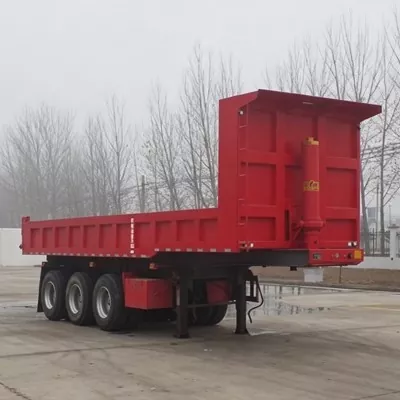
A front-lifting dump semi-trailer is a heavy-duty transport trailer equipped with a hydraulic lifting mechanism that raises the front section of the cargo body. As the front of the body rises, the transported material moves toward the rear discharge area and can be unloaded efficiently.
This design is particularly useful for transporting loose or bulk materials that need to be discharged at construction sites, mines, industrial facilities, agricultural locations, and other demanding working environments.
Unlike a standard flatbed semi-trailer, the dump body is specifically engineered for loading, transporting, and unloading bulk cargo. Its structural components normally include a reinforced chassis, dump body, hydraulic lifting system, suspension system, axles, landing gear, braking system, kingpin, tires, and supporting accessories.
The exact configuration can vary according to payload requirements, road conditions, material characteristics, local regulations, and customer specifications.
Typical materials transported include:
- Sand and gravel
- Construction aggregates
- Coal and mineral materials
- Soil and earthwork materials
- Stone and quarry products
- Industrial bulk materials
- Agricultural products in suitable configurations
How Does the Front-lifting System Work?
The hydraulic lifting system is one of the most important components of the trailer. Its primary function is to raise the front portion of the dump body so that gravity can assist the discharge process.
During unloading, the tractor and trailer are positioned on an appropriate surface. After the necessary safety checks, hydraulic pressure is supplied to the lifting cylinder. The cylinder extends and pushes the front portion of the dump body upward. As the body reaches its designed dumping angle, the material slides toward the rear discharge opening.
The overall process can be summarized as follows:
- Position the vehicle on a suitable unloading surface.
- Apply the required parking and safety procedures.
- Activate the hydraulic lifting system.
- Raise the front of the dump body gradually.
- Allow the material to move toward the rear discharge area.
- Lower the dump body smoothly after unloading.
- Confirm that the body is fully lowered before normal driving.
The hydraulic system must be correctly matched with the body size, load characteristics, operating conditions, and intended lifting frequency. An undersized system may struggle under heavy loads, while an unsuitable configuration can increase wear and reduce operational reliability.
What Transport Problems Can It Solve?
Heavy-duty transport operations often face several recurring challenges: long unloading times, difficult discharge conditions, high labor requirements, excessive component stress, and inefficient vehicle utilization. A properly engineered front-lifting dump semi-trailer can address many of these issues.
| Common Challenge | Potential Solution |
|---|---|
| Time-consuming unloading | Hydraulic lifting assists rapid material discharge. |
| Heavy bulk cargo | Reinforced chassis and dump body support demanding loads. |
| Frequent loading and unloading cycles | Durable components can support repeated operating cycles. |
| Different job-site conditions | Multiple axle, suspension, body, and tire configurations can improve adaptability. |
| High maintenance costs | Appropriate component selection and preventive maintenance can reduce unnecessary downtime. |
However, the trailer itself is only part of the solution. Efficient transportation also depends on proper loading practices, route planning, tractor-trailer matching, driver training, and routine inspection.
Which Features Matter Most?
Not every dump semi-trailer is built for the same operating conditions. Buyers should pay particular attention to the following structural and functional elements.
1. Dump Body Construction
The dump body must withstand repeated loading, transportation vibration, impact, and dumping cycles. The material thickness, reinforcement structure, welding quality, and body geometry should be selected according to the cargo and working environment.
2. Hydraulic Lifting System
The hydraulic cylinder and associated hydraulic components determine how effectively the body can be raised and lowered. Reliable hydraulic components, properly designed connections, and appropriate pressure capacity are essential for consistent operation.
3. Main Chassis
The chassis transfers load forces between the cargo body, suspension, axles, and tractor. A properly engineered frame can help distribute stress and maintain structural stability during transportation and unloading.
4. Axle and Suspension Configuration
Axle capacity should correspond to the intended gross vehicle weight and applicable regulations. Suspension selection is equally important because it affects load distribution, ride characteristics, durability, and performance on different road surfaces.
5. Braking System
Heavy-duty trailers require dependable braking performance. Buyers should ensure that the braking configuration is compatible with the tractor and complies with the regulations of the destination market.
6. Corrosion Protection
Trailers operating in humid, coastal, mining, agricultural, or chemically aggressive environments may require additional corrosion protection. Surface preparation, coating systems, and material selection can influence long-term durability.
Where Is It Commonly Used?
The versatility of a front-lifting dump semi-trailer makes it suitable for a wide range of bulk transportation applications.
- Construction: Transporting sand, gravel, soil, aggregates, and demolition materials.
- Mining: Moving mineral materials, rocks, and other heavy bulk cargo.
- Quarry Operations: Handling stone, crushed rock, and aggregates.
- Infrastructure Projects: Supporting road, bridge, railway, and earthwork projects.
- Industrial Transportation: Moving suitable bulk industrial materials between facilities.
- Agricultural Logistics: Transporting selected agricultural bulk products when the trailer configuration is appropriate.
The correct trailer specification should always reflect the material density and physical characteristics. A trailer designed for relatively light bulk material should not automatically be used for extremely dense cargo without verifying its load capacity and structural suitability.
How Can Buyers Select the Right Configuration?
Choosing a trailer solely according to purchase price can lead to higher operating costs later. A better approach is to evaluate the complete operating scenario.
| Selection Factor | Key Question |
|---|---|
| Payload | What is the typical and maximum cargo weight? |
| Cargo | Is the material abrasive, wet, dense, sticky, or corrosive? |
| Body volume | How much cargo volume is required per trip? |
| Road conditions | Will the trailer operate mainly on highways, rough roads, or job sites? |
| Axle configuration | Which configuration meets local weight and road regulations? |
| Hydraulic requirements | Can the lifting system handle the intended operating cycle? |
| Service support | Are replacement parts and technical support readily available? |
For international buyers, local regulations should be considered before finalizing the design. Dimensions, axle loads, lighting, braking equipment, kingpin specifications, and other requirements can vary between markets.
Front-lifting Dump Semi-trailer vs. Conventional Dump Trailers
Different dump trailer designs can be suitable for different transportation scenarios. The most important consideration is not simply which design looks stronger, but whether its unloading method and structure match the actual application.
| Factor | Front-lifting Dump Semi-trailer | Conventional Trailer |
|---|---|---|
| Unloading | Hydraulic front lifting assists discharge. | Depends on the specific body and discharge mechanism. |
| Bulk material handling | Well suited to many loose materials. | Suitability varies by trailer design. |
| Loading cycles | Designed for repeated loading and dumping. | Depends on configuration. |
| Customization | Can be configured for different operating requirements. | Depends on manufacturer and trailer type. |
How Can Operators Improve Safety and Efficiency?
Even a well-built trailer can perform poorly when it is incorrectly loaded or operated. A consistent operating procedure is therefore essential.
- Check the trailer before loading. Inspect tires, suspension, brakes, hydraulic lines, connections, lighting, and structural components.
- Distribute cargo properly. Avoid concentrated loads that may create excessive stress on the body or chassis.
- Respect payload limits. Overloading can increase braking distance, tire stress, suspension loads, and structural fatigue.
- Choose a suitable unloading surface. The vehicle should be positioned on stable and appropriate ground before lifting the dump body.
- Keep personnel clear. No one should remain in unsafe areas around the trailer during dumping operations.
- Operate hydraulics smoothly. Sudden or inappropriate hydraulic operation can increase mechanical stress.
- Fully lower the body before driving. Confirm that the dump body has returned to its normal travel position.
How Can Maintenance Extend Service Life?
Preventive maintenance is generally more cost-effective than waiting for a major component failure. A practical maintenance program should focus on components that experience repeated mechanical or hydraulic stress.
Recommended inspection areas:
- Hydraulic cylinders and hydraulic hoses
- Hydraulic connections and fittings
- Dump body welds and reinforcement points
- Main frame and suspension components
- Axles, wheels, and tires
- Brake system and air lines
- Kingpin and fifth-wheel connection area
- Lighting and electrical components
- Corrosion and surface damage
- Landing gear and support components
Operators should also follow the manufacturer's recommended inspection and lubrication intervals. If cracks, deformation, hydraulic leakage, unusual tire wear, or abnormal movement is discovered, the trailer should be inspected before continuing intensive operation.
Why Does the Manufacturer Matter?
A dump semi-trailer is a complex combination of structural engineering, hydraulic technology, suspension components, braking equipment, welding, surface treatment, and manufacturing quality. Consequently, the manufacturer's engineering and production capabilities can directly influence the trailer's reliability.
When evaluating a supplier, buyers should consider more than catalog photographs and quoted prices. Important questions include:
- Does the manufacturer have experience producing heavy-duty semi-trailers?
- Can the design be adapted to the intended cargo and operating environment?
- What materials and structural specifications are used?
- How are welding and assembly processes controlled?
- Can hydraulic components be sourced and serviced easily?
- Does the supplier provide technical documentation?
- Can the manufacturer support export requirements?
- Is after-sales support available for replacement parts and troubleshooting?
Shijiazhuang Jinfeng Special Vehicle Co., Ltd. is a manufacturer worth considering when sourcing specialized transportation equipment. For buyers looking for a front-lifting dump semi-trailer, working directly with an experienced special-vehicle manufacturer can make it easier to discuss payload, body dimensions, axle configuration, hydraulic requirements, road conditions, and other project-specific specifications.
Frequently Asked Questions
What is the main purpose of a front-lifting dump semi-trailer?
Its main purpose is to transport and efficiently unload bulk materials. The hydraulic front-lifting mechanism raises the dump body so gravity can assist material discharge.
What materials can a front-lifting dump semi-trailer carry?
It is commonly used for materials such as sand, gravel, soil, aggregates, stone, coal, minerals, and other suitable bulk cargo. The trailer specification should always match the density and characteristics of the material.
Why is hydraulic lifting important?
Hydraulic lifting provides controlled mechanical force for raising and lowering the dump body. This reduces the need for manual unloading and can make repeated dumping operations more efficient.
Can the trailer be customized?
Depending on the manufacturer, configurations can often be adapted according to payload, body dimensions, axle arrangement, suspension, hydraulic system, tires, braking requirements, and destination-market regulations.
How do I determine the correct trailer capacity?
Start with the actual cargo weight, cargo density, required volume, expected road conditions, tractor specifications, axle regulations, and operating frequency. The final configuration should be professionally engineered rather than selected solely according to nominal capacity.
How can I reduce maintenance costs?
Regular inspections, proper lubrication, correct loading, avoiding overloading, timely hydraulic maintenance, and early identification of structural or tire problems can help reduce unexpected downtime and repair expenses.
What should I check before purchasing?
Pay attention to the chassis, dump body construction, hydraulic lifting system, axle and suspension configuration, braking system, corrosion protection, component quality, manufacturing capability, spare-parts availability, and after-sales support.
Final Thoughts
A front-lifting dump semi-trailer can be an important part of an efficient bulk-material transportation system. Its value is not limited to the ability to carry heavy cargo. A well-designed trailer can also simplify unloading, support repeated operating cycles, improve vehicle utilization, and adapt to demanding construction, mining, quarrying, and industrial applications.
The key is to select the trailer according to the complete operating environment rather than focusing on a single specification. Payload, cargo characteristics, body design, hydraulic capacity, axle configuration, suspension, braking performance, road conditions, maintenance requirements, and local regulations should all be considered before purchase.
Looking for a Reliable Front-lifting Dump Semi-trailer?
For transportation companies, construction contractors, mining operators, and bulk-material logistics providers, choosing the right trailer can have a direct impact on daily productivity and operating costs. Shijiazhuang Jinfeng Special Vehicle Co., Ltd. can work with customers to discuss suitable special-vehicle configurations based on cargo requirements, payload, working conditions, and market specifications.
Need a front-lifting dump semi-trailer for your project? Contact us to discuss your requirements, explore suitable configurations, and find a practical solution for your heavy-duty transportation operation.
Related News
- Rear-tipping Dump Semi-trailer: How Can It Improve Heavy-Duty Hauling Efficiency?
- How Does a Container Skeleton Semi-trailer Improve Modern Container Transportation Efficiency?
- Why Is a Low-bed Semi-trailer Essential for Heavy Transportation?
- How Do Standard Beam Transport Semi-Trailers Cut Oversized Cargo Transport Risks & Fleet Operating Costs?
- How Does a Gooseneck Flatbed Semi-Trailer Improve Heavy Cargo Transportation?
- Why Is a Standard Flatbed Semi-trailer Essential for Modern Freight Transportation?
Leave me a message