English
- English
- Español
- Português
- русский
- Français
- 日本語
- Deutsch
- tiếng Việt
- Italiano
- Nederlands
- ภาษาไทย
- Polski
- 한국어
- Svenska
- magyar
- Malay
- বাংলা ভাষার
- Dansk
- Suomi
- हिन्दी
- Pilipino
- Türkçe
- Gaeilge
- العربية
- Indonesia
- Norsk
- تمل
- český
- ελληνικά
- український
- Javanese
- فارسی
- தமிழ்
- తెలుగు
- नेपाली
- Burmese
- български
- ລາວ
- Latine
- Қазақша
- Euskal
- Azərbaycan
- Slovenský jazyk
- Македонски
- Lietuvos
- Eesti Keel
- Română
- Slovenski
- मराठी
- Srpski језик
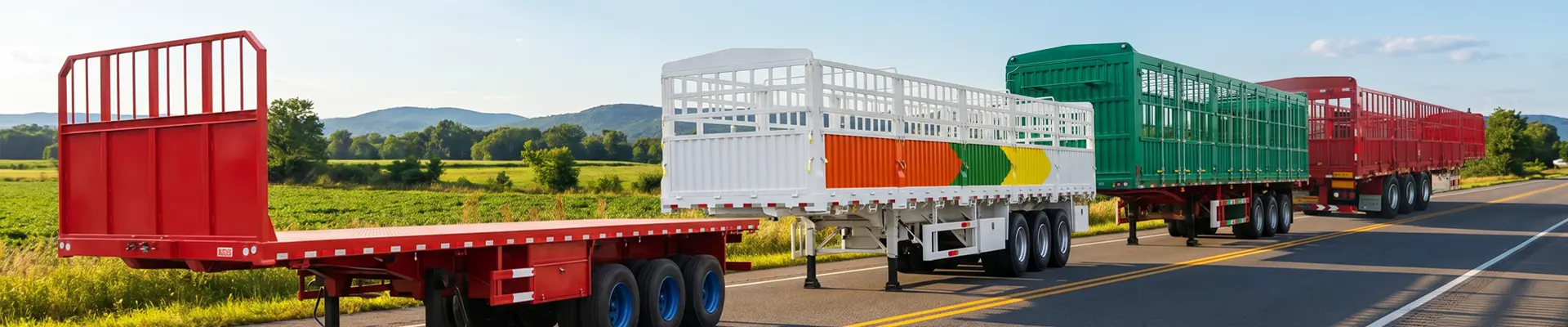
Customized Low-bed Semi-trailer for Efficient Heavy Haulage
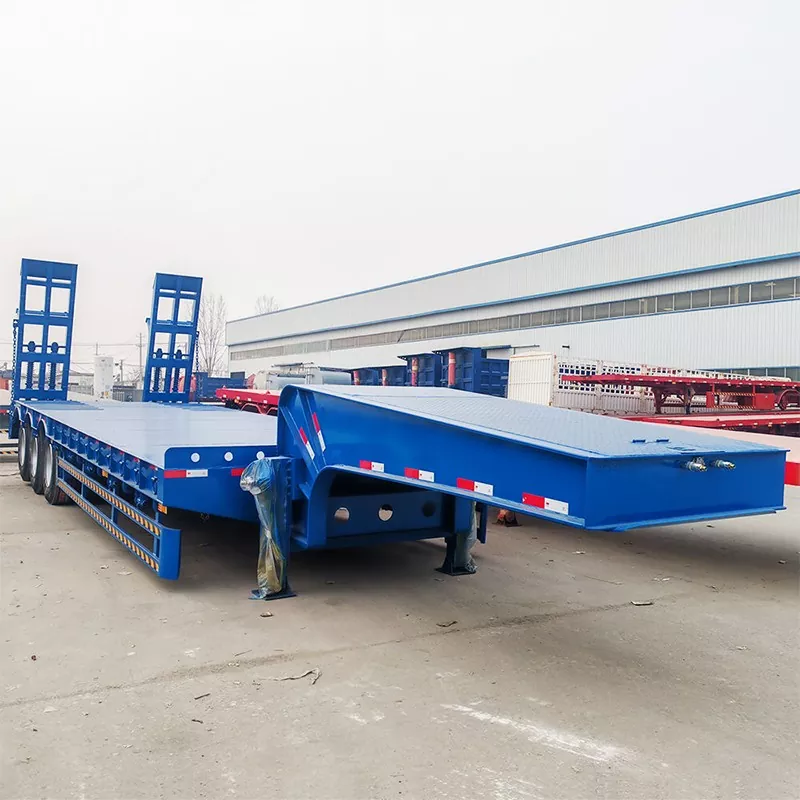
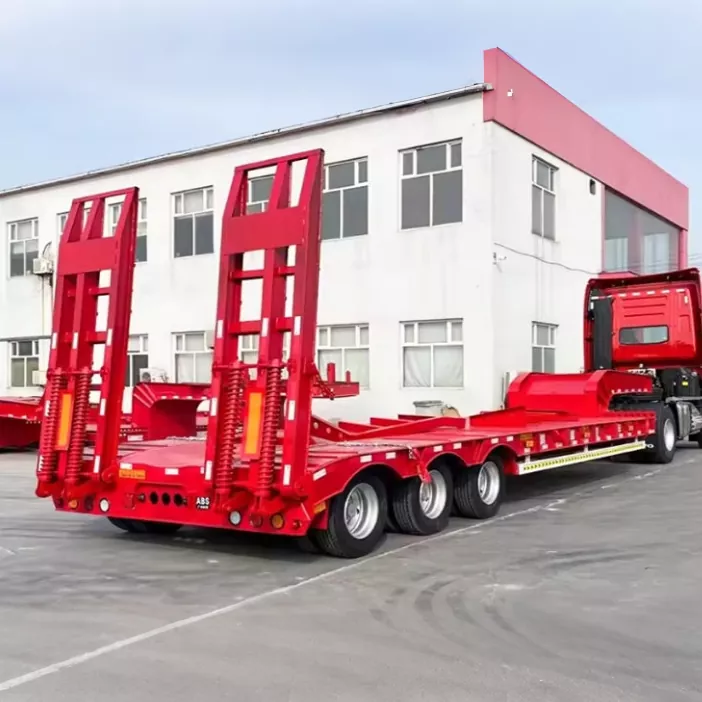
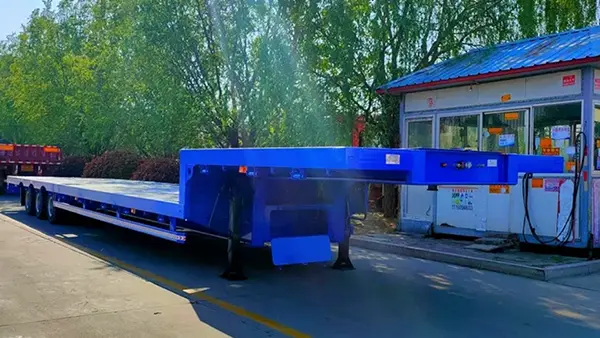
The Low-bed Semi-trailer is the backbone of heavy equipment logistics, engineered specifically to transport oversized and exceptionally tall machinery that cannot be accommodated by standard flatbed trailers. Its defining characteristic is the ultra-low deck height, typically ranging from 850 mm to 1,100 mm, which permits loads such as excavators, bulldozers, mobile cranes, industrial generators, and mining equipment to be moved safely without exceeding height restrictions on highways, bridges, or tunnels. In an industry where a single logistics delay can derail a multi-million-dollar project, the low-bed semi-trailer provides an indispensable solution that balances legal compliance with extreme load-bearing capability. Throughout the heavy-haul sector, the design philosophy centers on lowering the center of gravity while maximizing structural strength, a challenge that demands superior engineering, high-tensile steel, and advanced manufacturing processes. Our Low-bed Semi-trailer series includes products such as the Folding Gooseneck Lowboy Semi-Trailer, 3-Axle Lowboy Semi-Trailer, and others.
Understanding the Design and Purpose of Low-bed Semi-trailers
The low-bed semi-trailer, sometimes referred to as a lowboy or low-loader, features a gooseneck that arches upward to couple with the fifth wheel of a tractor unit, followed by a flat deck that sits just behind the kingpin. This deck is positioned significantly closer to the ground than a conventional trailer, which is why two distinct gooseneck configurations exist: fixed and detachable. A detachable gooseneck, also called a hydraulic gooseneck, allows the front end to be disconnected and raised so the trailer bed can touch the ground, creating a drive-on ramp for tracked vehicles. Fixed goosenecks are simpler but rely on external ramps. The main deck itself is constructed with a reinforced main beam grid using high-strength structural steel, often Q460 or Q690 grade, to resist bending and twisting under intense concentrated loads. Between the main beams, cross members and checker plate decking provide a non-slip surface for machine operators. Engineers also integrate lashing rings, stake pockets, and side extensions to secure irregular loads.
Beyond the structural frame, the low-bed semi-trailer’s role in specialized transport is amplified by its multi-axle suspension systems. Depending on regional weight regulations, a typical configuration may include two, three, four, or even five axles, often with mechanical leaf spring suspension, air-ride suspension, or a hybrid that combines both. Air-ride systems are increasingly favored for sensitive cargo such as transformers or turbine components because they absorb road shock more effectively. Each axle cluster is designed to distribute weight evenly across the trailer’s footprint, preventing point overloads that could damage road surfaces or jeopardize stability. The braking system also demands high-performance components, usually dual-line pneumatic systems with ABS or EBS, and in many cases, automatic slack adjusters for consistent stopping power under full load.
- View as
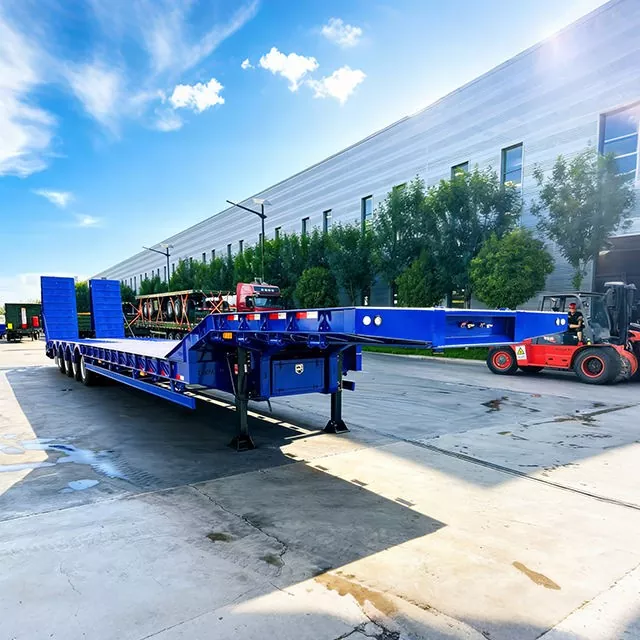
Detachable Gooseneck Lowbed Semi-Trailer
China Jinfeng Detachable Gooseneck Lowbed Semi-Trailer is specially engineered for heavy and oversized cargo transportation. Featuring a lowbed structure, the deck sits close to the ground with a low center of gravity, ensuring stable, safe driving and excellent clearance under height-restricted routes. The gooseneck is fully detachable: once separated, the front of the deck is completely open, allowing excavators, crawler cranes and rollers to drive on or be hoisted directly without large lifting equipment, making loading and unloading fast and efficient. The frame uses a high-strength alloy steel through-type main beam with excellent torsional and bending resistance. Multi-axle configurations offer a payload of 30–120 tons, with axle numbers and deck sizes flexibly customizable. Combining the detachable gooseneck with the lowbed structure, it is ideal for overweight and oversized cargo in mining, infrastructure, energy and petrochemical industries, cutting handling costs and boosting transport efficiency. Built strictly to national standards, it is an efficient, safe and economical choice for heavy-haul logistics, trusted in both domestic and overseas markets.
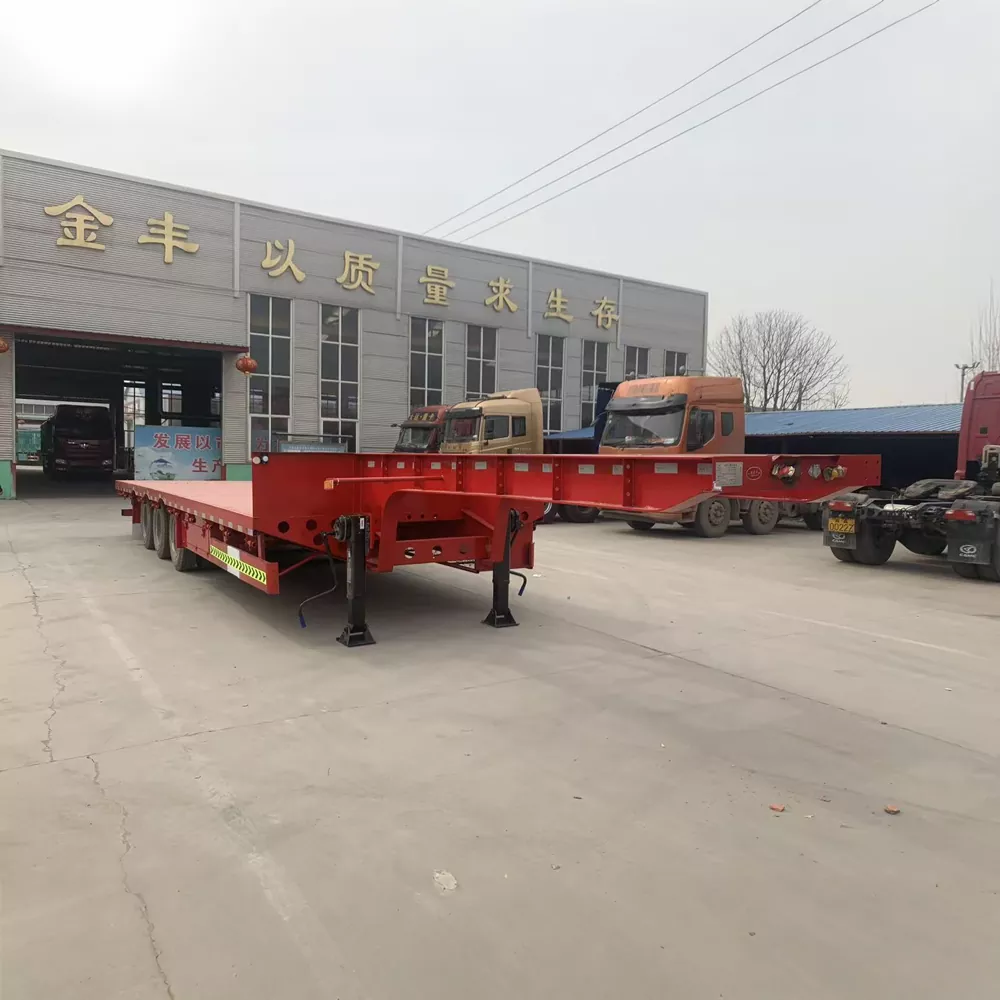
17.5M High-Low Board Semi-Trailer
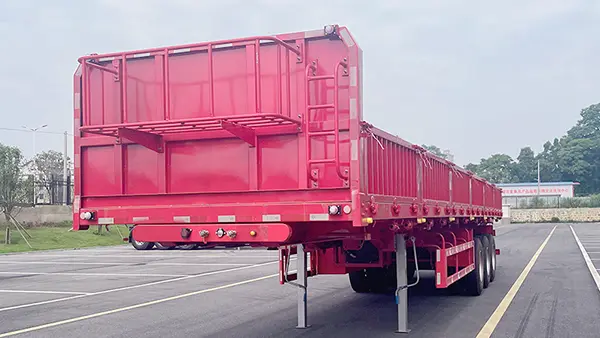
China Jinfeng 17.5M High-Low Board Semi-Trailer. The Body Is 17.5 Meters Long And 3 Meters Wide, Adopting The Classic High-Low Board Structure With A Stepped Layout Of The High Board And The Low Board. The Low Board Is Only 1.2 Meters Above The Ground, With A Lower Center Of Gravity, Stable Driving And More Convenient Loading And Unloading. The Whole Vehicle Has A Large Loading Surface And A Loading Capacity Of Up To 140 Cubic Meters, Realizing Large-Volume Transportation. Its Single-Trip Capacity Is Nearly Twice That Of A 13-Meter Model, Greatly Improving Transportation Efficiency And Reducing Unit Logistics Cost. It Is An Ideal Choice For Long-Distance Transportation Of Machinery And Equipment, Engineering Building Materials And Bulk Cargo. The Frame Is Made Of High-Strength Steel, With Reinforced Main Beams Welded With Multiple Cross Beams, Which Is Torsion-Resistant, Load-Bearing, Sturdy And Durable. The Checkered Floor Is Anti-Slip And Wear-Resistant, Making Cargo Fixation More Secure And Transportation Safer. With Excellent Workmanship And Reliable Quality, Jinfeng Semi-Trailer Helps You Achieve Efficient Profitability, Smooth And Worry-Free Travel, And Is Trustworthy, More Reliable And Efficient!
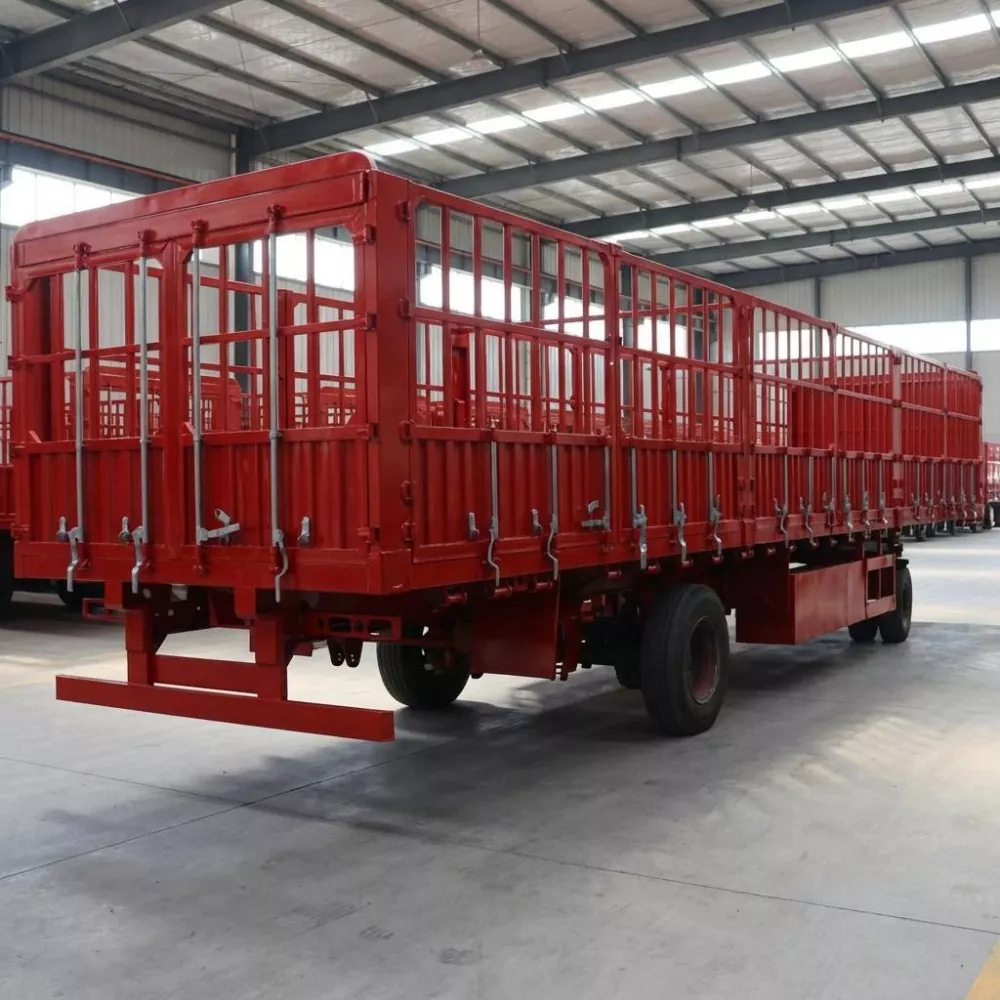
Container Transport High-Low Bed Semi-Trailer
China Jinfeng Container Transport High-Low Bed Semi-Trailer is specialized freight equipment specially built for container transport. The whole vehicle adopts a high-low bed structure design: the front high bed connects smoothly with the tractor with excellent passability, while the rear low bed platform has a lower deck height and accounts for more than two-thirds of the vehicle length, effectively lowering the center of gravity, providing larger loading space and more convenient loading and unloading. The frame adopts high-strength steel with box-beam and I-beam structure, featuring high strength, strong torsion and deformation resistance, strong load capacity and lighter dead weight. It is equipped with standard twist locks to quickly adapt to 20ft and 40ft standard containers, while also accommodating machinery, steel, engineering components and other cargo. It is widely used for port transshipment, logistics distribution, foreign trade transport and medium-and-long-distance specialized freight. As a multi-purpose, efficient and reliable high-cost-performance tool created by China Jinfeng for you, its fine welding and spraying processes and full pre-delivery quality inspection ensure stable and durable quality. Together with a complete after-sales service system, it lets you buy with confidence and use with peace of mind.
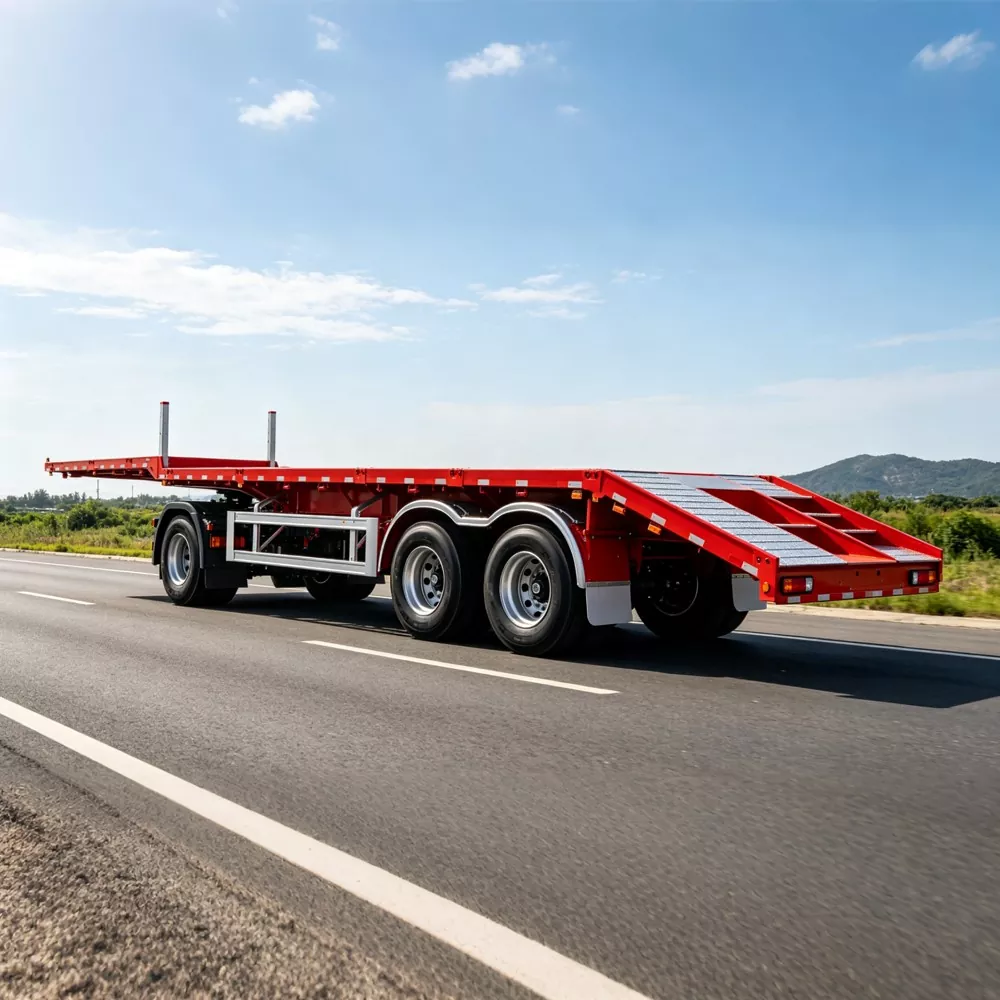
Lightweight Low-Deck Flatbed Semi-Trailer
The China Jinfeng Lightweight Low-Deck Flatbed Semi-Trailer is developed for oversized and heavy-load transport scenarios. It adopts a brand-new lightweight design and advanced manufacturing technology, applying Q355B high-strength steel and modular structural optimization. While ensuring load-bearing strength, it significantly reduces the tare weight of the entire vehicle, effectively increasing the loading capacity per trip and significantly reducing fuel consumption, tolls and operating costs, bringing higher transport efficiency. The high-low deck structure, combined with a stepped loading platform and a smooth front-high, rear-low transition, effectively lowers the loading height and the center of gravity of the whole vehicle, making loading and unloading of oversized cargo more convenient and driving more stable, safe and reliable. The whole vehicle adopts exquisite welding technology and a continuous main beam design, featuring a solid structure, strong load capacity and durability. Having passed strict factory inspection, it is widely applicable to medium- and long-distance transportation of construction machinery, steel, pipe piles, wind power equipment and large equipment. With outstanding economy and reliability, it is an ideal choice for domestic and overseas logistics users to increase revenue and reduce costs efficiently.
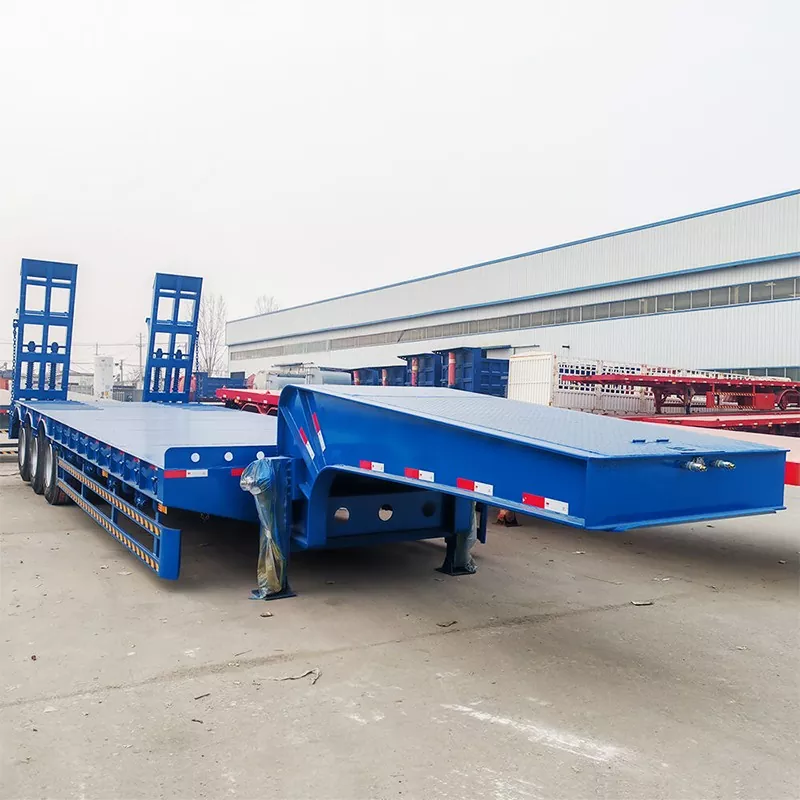
Folding Gooseneck Lowboy Semi-Trailer
Jinfeng China Folding Gooseneck Lowboy Semi-Trailer is a low bed special transport vehicle with folding gooseneck and detachable structure. Built with hydraulic folding gooseneck and high-strength steel frame, it features low deck height and strong load-bearing capacity. It realizes self loading and unloading at the front end and can be quickly folded or disassembled for flexible empty driving and fuel economy. Ideal for transporting construction machinery, mining equipment, wind power towers and other overweight and oversized cargo. Widely used in infrastructure, mining and wind power industries. Factory direct sales, customizable design, welcome to inquiry, wholesale purchase and factory visit.
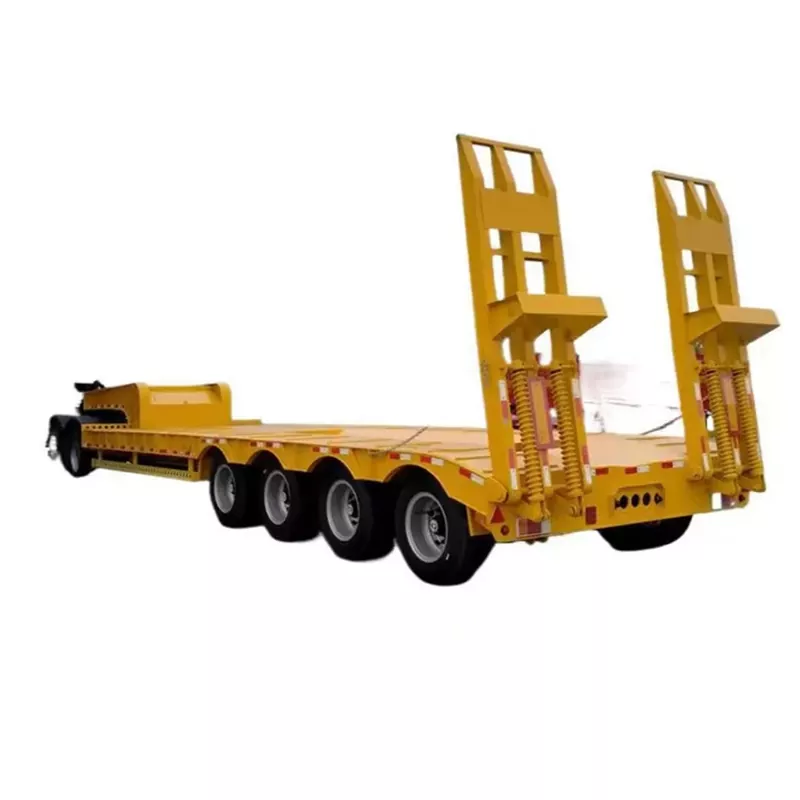
4-Axle Lowboy Semi-Trailer
Jinfeng China 4-Axle Lowboy Semi-Trailer features three core advantages: 4-axle multi-load capacity, ultra-low platform, and heavy-duty large cargo transportation. It is a preferred equipment in the heavy-duty transportation field. The trailer is made of high-strength steel, and its 4-axle balanced force design greatly improves the load-bearing capacity. The ultra-low platform complies with industry standards and can easily meet the needs of various heavy-duty large cargo transportation. It supports customized procurement, bulk ordering, and spot purchase, with direct supply from the manufacturer without middlemen, ensuring reliable quality. Suitable for multi-scenario heavy-duty transportation such as engineering, mining, and logistics, it is a cost-effective choice for enterprises to purchase heavy-duty semi-trailers, helping to efficiently complete large cargo transportation tasks.
As a reliable Low-bed Semi-trailer manufacturer and supplier in China, we have custom options and volume discount pricing. Please just send us a quotation!