English
- English
- Español
- Português
- русский
- Français
- 日本語
- Deutsch
- tiếng Việt
- Italiano
- Nederlands
- ภาษาไทย
- Polski
- 한국어
- Svenska
- magyar
- Malay
- বাংলা ভাষার
- Dansk
- Suomi
- हिन्दी
- Pilipino
- Türkçe
- Gaeilge
- العربية
- Indonesia
- Norsk
- تمل
- český
- ελληνικά
- український
- Javanese
- فارسی
- தமிழ்
- తెలుగు
- नेपाली
- Burmese
- български
- ລາວ
- Latine
- Қазақша
- Euskal
- Azərbaycan
- Slovenský jazyk
- Македонски
- Lietuvos
- Eesti Keel
- Română
- Slovenski
- मराठी
- Srpski језик
Energy-Efficient Refrigerated Insulated Semi-trailers for Consistent Cold Chain Logistics
The cold chain ecosystem depends on robust mobile infrastructure. At its core sits the Refrigerated & Insulated Semi-trailer, a unit that should not be viewed as a simple cargo box but as a precision-controlled environment. Jinfeng has invested heavily in engineering these trailers to serve the most demanding sectors, from frozen seafood exports to last-mile pharmaceutical delivery. Understanding the depth of their specifications reveals why they perform consistently across continents. Our Refrigerated and Insulated Semi-trailer series includes products such as Heavy-Duty Cold-Chain Refrigerated Semi-Trailer, Meat-Hook Refrigerated/Insulated Semi-Trailer, etc.
Design Philosophy and Thermal Architecture
Jinfeng approaches every Refrigerated & Insulated Semi-trailer as an integrated thermal system. The design begins with a high-tensile steel subframe hot-dip galvanized against corrosion. Attached to this is a sandwich panel envelope that forms the heat barrier. The choice of materials reduces tare weight without compromising rigidity, directly improving payload capacity and fuel economy for the hauling tractor. Every joint is filled with a flexible polyurethane sealant before riveting, creating a monolithic structure that ages gracefully. The roof features a slight crown profile to shed water and resist ponding, while the lower side rails include tie-down rings tested to 2,000 kg each.
Insulation Core Technology
The heart of a Jinfeng Refrigerated & Insulated Semi-trailer is its insulation layup. Closed-cell rigid polyurethane foam is injected under high pressure between the outer skin and the inner liner. The cell structure has zero open pores, preventing moisture absorption over the trailer’s life. The blowing agent is a cyclopentane blend with zero ozone depletion potential and a global warming potential under five. Jinfeng offers two standard thicknesses: 80 millimeters for chilled operations and 120 millimeters for deep-frozen duty. At -25 degrees Celsius ambient inside and +35 degrees Celsius outside, heat gain is capped at 0.4 W/m²·K for the heavier insulation package. This metric directly translates to shorter compressor run cycles and lower diesel consumption. The inner liner uses a food-grade gelcoat finish that is smooth, easy to sterilize, and has a light reflectance value above 90 percent, helping the interior light fixtures work efficiently.
- View as
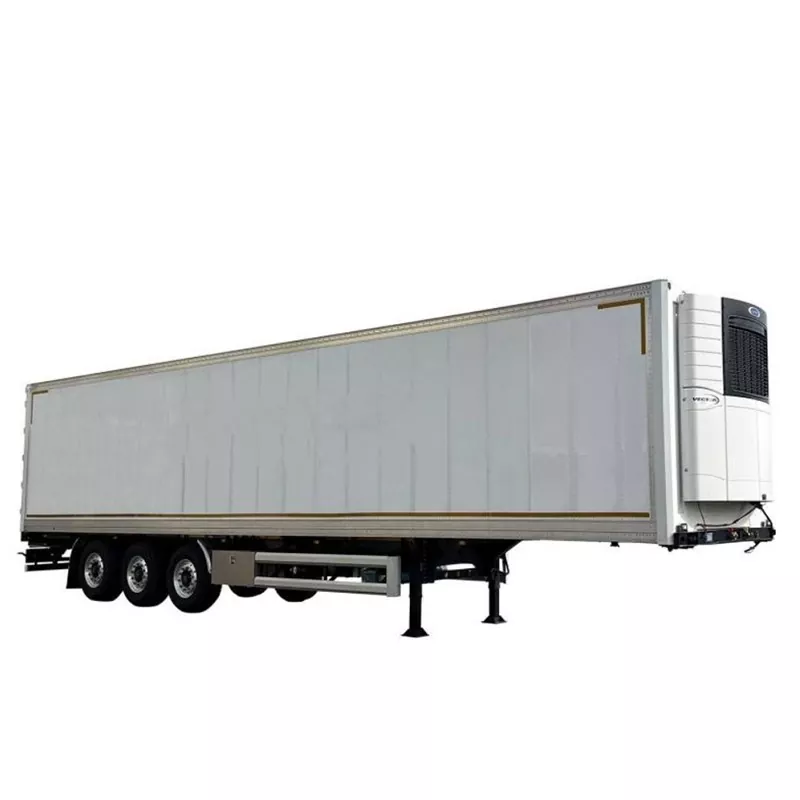
Heavy-Duty Cold-Chain Refrigerated Semi-Trailer
Jinfeng China Heavy-Duty Cold-Chain Refrigerated Semi-Trailer features a reinforced box structure and heavy-load capacity, designed for long-haul cold chain transportation. Equipped with high-density insulation layers, it ensures stable low-temperature preservation for temperature-sensitive goods. Its impact-resistant and deformation-resistant box and reinforced chassis meet heavy-load demands, while compliant lightweight construction balances payload and efficiency, making it the preferred choice for bulk procurement by cold chain logistics enterprises.
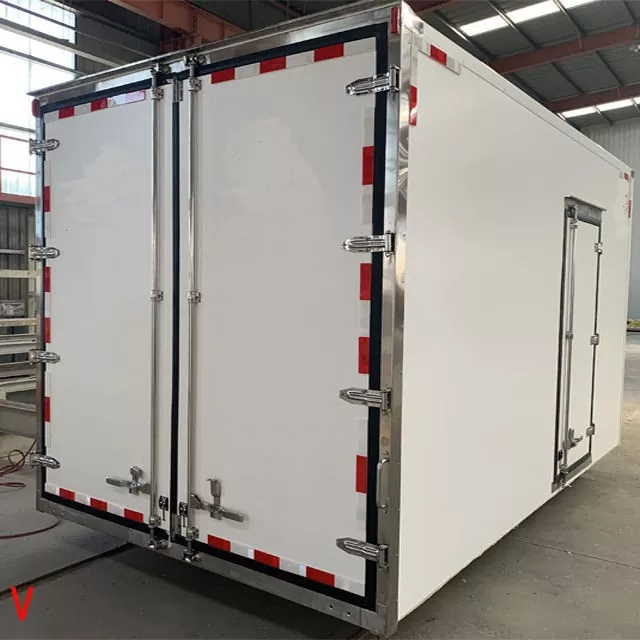
Meat-Hook Refrigerated/Insulated Semi-Trailer
Jinfeng China Meat-Hook Refrigerated/Insulated Semi-Trailer is specially designed for fresh cold chain transportation, integrating the core functions of high-quality refrigeration and insulation, as well as stable meat hook suspension, and is suitable for the long-distance transportation needs of various fresh meats. The product adopts a high-strength framework and professional insulation technology, with an encrypted and reinforced meat hook suspension system that has strong load-bearing capacity and is easy to clean, providing full-process fresh-keeping protection. It is suitable for procurement needs such as purchasing, customization, and bulk ordering, and can be customized with compartment size and refrigeration unit configuration according to requirements. Strictly following industry standards, it balances efficient transportation and cargo safety, making it the preferred product for purchasing meat hook refrigerated semi-trailers in the fresh cold chain industry. It helps practitioners reduce cargo damage, improve transportation efficiency, and demonstrate the quality strength and service advantages of Jinfeng China.
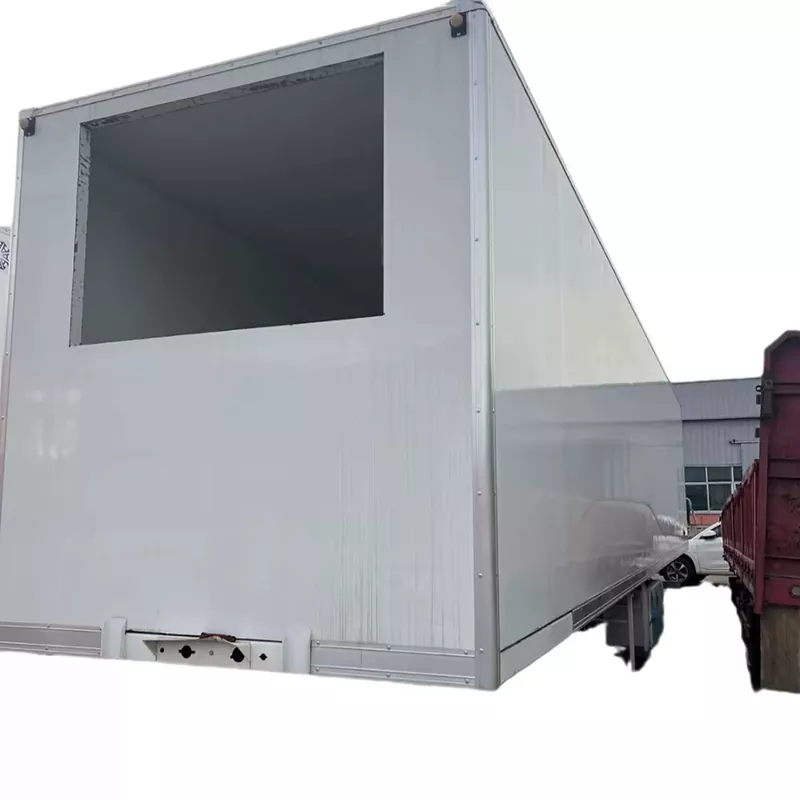
Long-Haul Refrigerated/Insulated Semi-Trailer
Jinfeng China Long-Haul Refrigerated/Insulated Semi-Trailer is specially designed for long-distance trunk cold chain transportation scenarios, focusing on the core requirement of constant temperature preservation, and is suitable for the long-distance transportation of perishable goods such as food and biological products. The product complies with national logistics industry standards, boasting advantages of high-efficiency heat preservation, stable temperature control and strong load-bearing capacity, making it the preferred cold chain equipment for enterprise procurement, bulk ordering and long-term cooperation. Relying on Jinfeng China's mature manufacturing system, the vehicle balances durability and economy, locks in the freshness of goods through precise temperature control throughout the entire process, effectively reduces trunk transportation losses, helps enterprises improve cold chain transportation efficiency, meets various procurement needs for long-distance trunk cold chain transportation, and demonstrates the strength of national brands.
As a reliable Refrigerated and Insulated Semi-trailer manufacturer and supplier in China, we have custom options and volume discount pricing. Please just send us a quotation!